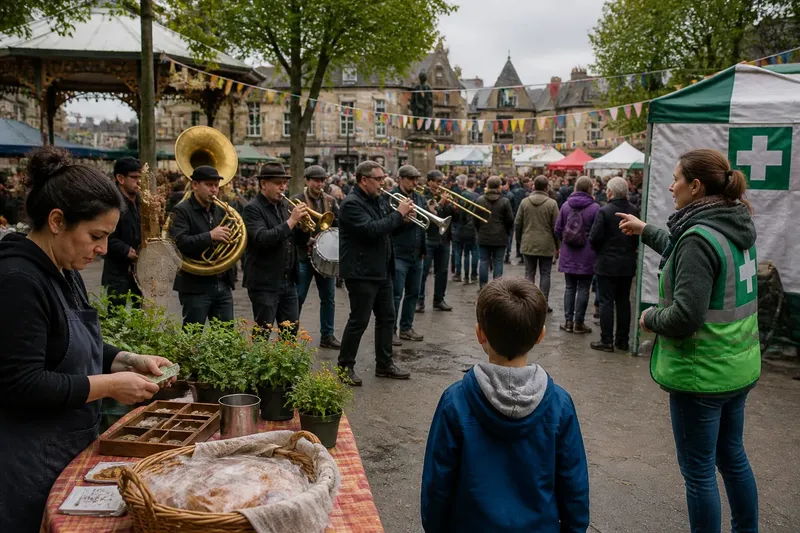
Market Stall or Shop Shelf: Two Routes for a Traveling Object
Market stall or shop shelf: see how setting, display and seller stories shape an object’s meaning, and learn what to ask before carrying it home.
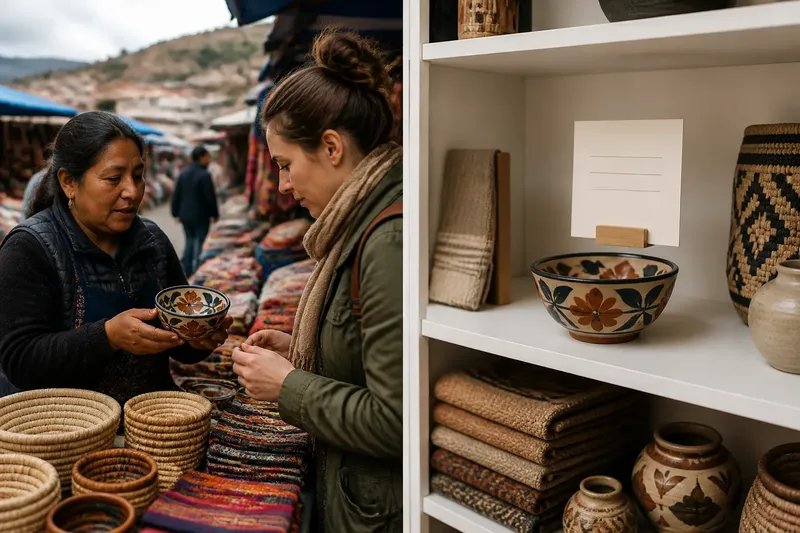
You pause beside a market stall where a small painted bowl sits among woven baskets and folded cloth. A few streets away, a similar bowl rests on a white shop shelf beneath a tidy card. The objects may look alike, but their surroundings invite different questions. A market meeting often unfolds through conversation; a shop display tends to offer a prepared account. Comparing the market stall or shop shelf is a way to notice how an object acquires context as it travels.
Neither setting tells the whole story by itself. A stall can be carefully staged, and a shop can be lively and personal. The useful distinction is not “authentic” versus “commercial”; it is how presentation and the stories attached to an object guide what a visitor thinks it is, who made it and what taking it elsewhere might mean.
A market stall makes context part of the encounter
At a stall, the object is commonly seen alongside other goods, the seller and the daily activity around them. A seller might explain that a particular pattern belongs to a local workshop, that the material came from nearby, or that the object is made for ordinary use rather than display. The account may emerge in response to a question, while the object is handled or compared with another one.
This closeness can make the exchange feel vivid, but it can also leave gaps. A busy market is noisy; details may be offered casually, and a visitor may misunderstand a place name or assume a design has one fixed meaning. A warm conversation is not the same thing as a complete account. Ask a clear question, listen for what the seller knows directly, and leave room for uncertainty.
Notice the stall’s arrangement, too. A cluster of objects can suggest a family of uses or materials, while a single striking piece placed at eye level may be intended to catch passing attention. Those are clues about the seller’s presentation, not proof of an object’s origin. If the account matters to you, ask whether the seller knows who made it and whether the maker’s name or workshop is available.
A shop shelf gives the object a composed frame
Retail displays often create a quieter, more deliberate encounter. Lighting, spacing, packaging and a printed label can make an object appear as a design choice, a souvenir or a useful household item. A card may give a place of origin, materials and a short description of a technique. That information is easy to revisit after the conversation has ended.
The frame can also narrow the story. A label has little room, and a shop may present a complex tradition through one neat phrase. Decorative objects can be detached from everyday use; a practical object can be styled as a keepsake. Treat the wording as an introduction rather than a complete biography. Look for specific details: a named maker, a workshop, a material, or an explanation of how the object is used.
Packaging has its own effect. A box that protects a fragile object may also conceal how it was displayed or made. If the object is meant for use, ask whether the finish and care instructions suit that purpose. If it is meant as decoration, ask what the seller can say about the image or motif, rather than assuming its meaning from appearance alone.
When the story feels vague, ask for something you can check
A common snag is a broad description such as “traditional craft” or “made locally” with no further detail. Usually, the phrase is doing too much work: it signals cultural character without saying which person, place, material or process is involved. Try asking one focused follow-up, such as, “Do you know the workshop that made this?” or “What is this usually used for?”
If the answer remains uncertain, do not press for a more impressive story. You can still appreciate the object while keeping its background open. A seller may know the trader who supplied it but not the maker; a shop may have received a short description with its stock. Those limits are useful information in themselves.
Another problem is a story that sounds identical for every item, even when the objects differ. Ask what distinguishes this piece from the one beside it: its material, finish, shape or intended use. If no distinction is known, avoid repeating a specific origin claim as fact when you describe the object to someone else.
When display suggests a meaning, separate clue from claim
A market may place an object beside ingredients, tools or clothing that suggest how it belongs in daily life. A shop may surround it with maps, photographs or coordinated colours. These arrangements help a visitor read the object quickly, but they are choices made by the seller or retailer. They can be informative without settling what the object means to its maker or community.
Say you are choosing between two hand-painted cups, one at a stall and one in a design shop. The stallholder says the cups come from a nearby studio and are used at home; the shop card names a broad region but says little about the maker. You ask the stallholder whether the studio’s name is written anywhere and ask the shop assistant if the supplier can provide more detail. The observable result is not a verdict on which cup is “more real”; it is a clearer record of what each seller can actually tell you.
When a motif seems religious, ceremonial or otherwise sensitive, do not infer permission to use it from the fact that it is for sale. Ask how the design is understood and whether it is intended for ordinary use. If the answer is unclear, choosing a less ambiguous object is a considerate option.
When the two accounts differ, keep the difference visible
A market seller and a shop label may give different places, uses or descriptions for objects that look similar. That does not automatically mean one account is false. The pieces could come from different makers, or a retailer may use a broad regional term while a seller names a town or workshop. Compare the precise claims before deciding there is a contradiction.
Check the object itself for a maker’s mark, tag or material description, then ask each seller what the wording refers to. “Made in” may describe where an item was finished, while a design may be associated with another place. Keep those ideas distinct in your own notes. If no one can clarify, say that the accounts differ rather than merging them into a confident single story.
For an object that will be carried across a border, the seller’s cultural explanation is separate from rules about bringing goods into another country. Requirements can depend on the material and destination. Check current official guidance where relevant, and follow the seller’s care and handling advice for the item.
How can you read a market stall or shop shelf?
What should I ask the seller?
Ask who made the object, where it was made and what it is for. One answer may be known while another is not, so keep the questions distinct rather than treating “Where is it from?” as enough.
Does a market stall give a more authentic account than a shop?
Not by itself. A stall may offer direct conversation, while a shop may preserve useful written details; either can have gaps or present a carefully selected story.
How should I read a short label?
Use it as a starting point and note whether it names a maker, place, material or use. Broad phrases such as “local craft” offer less specific context than a named workshop or process.
What if I cannot verify the object’s story?
Keep the description modest and repeat only what the seller or label actually says. You can value an object without supplying it with a more detailed origin story than the available information supports.
Choose the context you can carry with the object
Before buying, pause to notice how the object is presented, what account accompanies it and which details remain uncertain. A market conversation may give you a memorable explanation; a shop label may leave a durable written clue. If context matters, ask permission to note the maker’s name or photograph a tag, and write down the seller’s wording while it is fresh.
The best account is not necessarily the longest or most polished. It is the one you can describe honestly: what you saw, what you were told and what you still do not know. That small distinction lets a traveling object arrive with its story intact, including the parts that remain open.